


Imagine, if you will, that Wyoming’s infamous Hole in the Wall Gang in the late 1890s was composed of young women escaping a post-pandemic totalitarian society.
 That’s the scenario constructed by Anna North in her new revisionist historical novel, “Outlawed.” These “outlaws” were driven from their communities because they are unable to bear children.
North’s imagined society compels women to be fruitful and multiply (in the manner of “The Handmaid’s Tale”). Babies are crucial because, in the 1830s, a pandemic killed nine out of every 10 people.
Not reproducing in 1894 is a crime, but sometimes nature intervenes in the form of infertility, disease or bad luck. The barren ones are banished or shunted off to convents. Sometimes, infertility coincides with a rash of infant deaths. Those young women get blamed and, when rumors reach a fever pitch, they are hanged as witches.
So it’s off to the Hole in the Wall. If you can arrange it.
Ada does.
She is a 17 year old from the community of the Independent Town of Fairchild. The U.S. and its states no longer exist as governmental entities. Fairchild is in Powder River country east of the Bighorns, somewhere north of the imagined Independent Town of Casper and near what is present-day Kaycee. Ada is the daughter of the town’s midwife, who has been granted the privilege of staying unmarried as a woman who bore more than three children.
The story is told from Ada’s point of view She longs to marry and have children. She and her new husband do their duty but nothing happens. Even prayers to Baby Jesus don’t help. Ada’s mother-in-law hounds her, and her husband decides to sleep with her only on prime conceiving days.

Her mother advises her to take on a lover because her future is bleak if she does not become a mother. She arranges for Ada to meet a man who has a proven track record. That leads to a new sexual experience for Ada that does not align with society’s approved family planning manual.
Word spreads about Ada’s supposed heresy. At the same time, a rash of birthing deaths occur. Ada is banished from the marriage and word spreads that she is a witch.
A trip to a convent doesn’t stick, and arrangements are made for Ada’s passage to the Hole in the Wall gang led by “The Kid.”
This is the spot where North’s imagination and history collide. The lore of the Sundance Kid, Butch Cassidy, the Wild Bunch and Hole in the Wall has been told in nonfiction and fiction. It hit the silver screen in 1968 and millions thrilled that outlaws could be such hunks, and witty too. Crowds were titillated by the possibility of a Redford/Newman/Ross love triangle to the tune of B.J. Thomas’s “Raindrops Keep Falling on My Head.”
A sad ending, alas …or was it?
Wyoming lore speculates that Butch and Sundance returned from Bolivia and lived incognito out in the Wide Open Spaces. Jail cells that once held these outlaws are tourist sites in Laramie and Rawlins.
North, who is also mystified by the behavior of her fellow humans, spins a version of history that is more severe and more fun than the reality. Her Ada joins a long line of literature’s sardonic narrators such as Tristram Shandy, Elizabeth Bennet, Holden Caulfield and Onion in James McBride’s revisionist historical novel “The Good Lord Bird.”
Ada slowly realizes that the gang is made up of women, most dressed as men. This includes the Kid himself/herself. Some members wear dresses but the gang decides that Ada, with her less-that-voluptuous frame, is best suited to traditional cowboy duds. (That leads to a scene where a drunken cowboy tries to put the moves on him/her and Ada realizes, maybe for the first time, that “some cowboys like other cowboys.” Yee-haw!)
Ada takes us on a rollicking ride through the West. No spoilers here! By book’s end, I was impressed with the author’s storytelling skills.
Wyoming is the ideal place for fiction for several reasons. It features beautiful places and foreboding desolate places. Few people live here (and even fewer in the 1894 of “Outlawed”) and few outsiders know anything about it. As I viewed those recent high-res videos from Mars, I kept expecting a “Welcome to Wyoming” sign to pop up any time.
So a Hole in the Wall gang dominated by women does not seem too fanciful.
Anna North is not a Wyomingite. The state has a long history with “drop-in” writers, those who pop by to get a taste of the state, see a few of the sites and go back to wherever they came from. That can result in a shallow view of the state’s complexities, but I don’t think that’s the case with “Outlawed.”
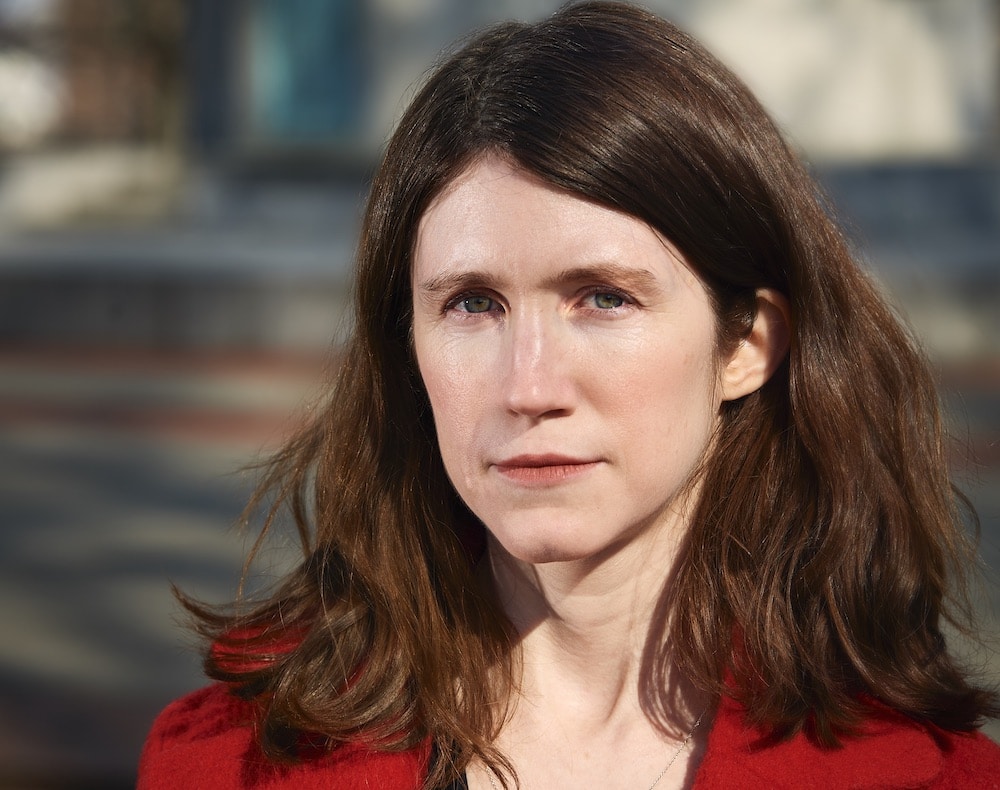
North is a New Yorker who writes for the New York Times and Vox. Her specialty is writing about policy that impacts children’s health. So Ada’s mother’s midwifery and Ada’s role as doctor to the gang make sense. Judging from her descriptions of Wyoming, North has at least traveled here and spent some time with the folks at Willow Creek Ranch in Hole in the Wall.
Fiction should transport us to new places. North does this in “Outlawed.” It’s a great story populated by vibrant characters.
I can imagine listening to the audiobook on that drive from Cheyenne to Buffalo and points north. Stop for a few moments along Johnson County’s Crazy Woman Creek and picture a group of “crazy women” outlaws dealing with a crazy society that demonizes women who are not mothers. You can see Hole in the Wall country to the west as you drive north. Imagine Ada in the scene where she stands tall on this rugged escarpment and looks out on the world. Ada asks The Kid what God wants from us. The Kid borrows from the Bible for his reply: “He will make you father of many nations, Ada. Watch and see.”
At that time in the tale, the answer puzzles Ada. But it makes sense by the time the reader reaches the unexpected end of this inventive novel of the West.
Support Wyoming arts coverage — donate to WyoFile today
Studio Wyoming Review is supported in part by generous grants from the Wyoming Cultural Trust Fund, a program of the Wyoming Department of State Parks and Cultural Resources and the Wyoming Arts Council with funding from the Wyoming State Legislature and the National Endowment for the Arts.
Think I’ll order the book. It sounds like a pretty fair allegorical tale of the status of the current, or soon-to-be 21st Century US.