

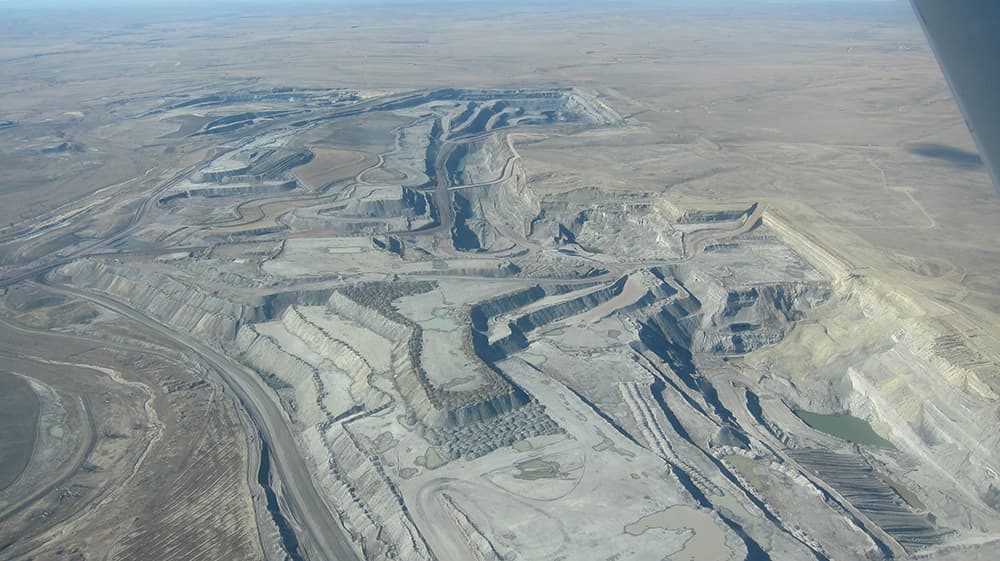
by Manuel Quiñones, E&E reporter
Originally published March 30, 2015. Republished here with permissions from E&E.
Peabody Energy Corp., the world’s largest private-sector coal company, is downplaying the potential impact of the Interior Department’s coal leasing reforms.
At issue are new Bureau of Land Management guidelines and a proposed rule by the Office of Natural Resources Revenue meant to close what industry critics call loopholes in the valuation process.
Those critics have accused the administration of not taking enough account of exports during the leasing process, as well as allowing companies to sell coal through subsidiaries or affiliates as a way of reducing what they pay the government.
The National Mining Association and Cloud Peak Energy Inc., which focuses on the Powder River Basin and has significant federal coal deposits, have blasted the ONRR proposal.
But last week, Peabody sent a note to analysts on the proposed rule, as described in a filing with the Securities and Exchange Commission.
The company said “certain recent news articles have overstated the potential effects of U.S. government royalty changes for coal mined on federal lands, with the most relevant proposed rule changes related to exports.”
Peabody said it wanted to clarify “that a vast majority of the Company’s Southern Powder River Basin coal production is sold to end-use customers for domestic generation purposes and would not be affected by this rule.”
Also, the company said it “would have had little financial impact from this proposed rule if it were in place in recent years because only a small amount of the coal it exported was sourced from federal lands.”
Likely behind Peabody’s statement, and another by NMA last week, is concern that comments about the proposed rule may be spooking investors and analysts about Powder River Basin coal production (Greenwire, March 27).
Cloud Peak, which has been outspoken about its opposition to the proposed rules, described them in starker terms in an SEC filing that says “the federal government has recently proposed to significantly alter the method for valuing royalty payments for non-arms’ length sales, which, if enacted, could materially adversely affect our profitability and cash flows related to our logistics business” (Greenwire, March 5).
And this morning, Cloud Peak spokesman Rick Curtsinger said, “It is our view that the rule is completely unjustified and is a thinly veiled effort to inhibit the mining of federal coal that affects all non-arm’s-length sales by miners of federal lease coal.”
He added, “While the percentage of Cloud Peak Energy sales likely impacted by the rule is currently relatively small, we believe the rule is designed to inhibit coal exports from the Powder River Basin and could, if unchanged, cost Montana and Wyoming access to a potential 100-million-ton export market at a time when declines in the domestic market projected as a result of the Clean Power Plan mean these states could face serious budget shortfalls in the near future.”
Environmental groups and other watchdogs, for their part, say the changes at BLM and ONRR’s proposal may not go far enough. They are pressing for deeper valuation reforms, plus charging mining companies for the potential effects of burning the government-owned coal.