


The dynamics that placed coal among the main pillars of Wyoming’s economy for the past 40 years are changing rapidly. Natural gas has sapped Powder River Basin coal’s U.S. utility market for the past five years, while economists say pending emission regulations will dampen U.S. coal demand even further in the future.
Powder River Basin producers desperately want to break into the export market for relief, and secure contracts with Asia-Pacific customers. Yet exports have proven a volatile market that one industry analyst said is in structural decline — not to mention the added challenge of opposition to building the necessary deep sea ports in the Pacific Northwest.
Adding to the bleak picture, Powder River Basin coal producers Arch Coal Inc. and Alpha Natural Resources took on huge debt and bet big on metallurgic coal in the eastern U.S., which proved to be a mistake. Now Alpha appears headed for bankruptcy while industry insiders say Arch may not be far behind.
Yet there’s another negative factor playing against Wyoming coal that doesn’t get as much attention as regulatory matters — the rising cost of mining in the Powder River Basin.
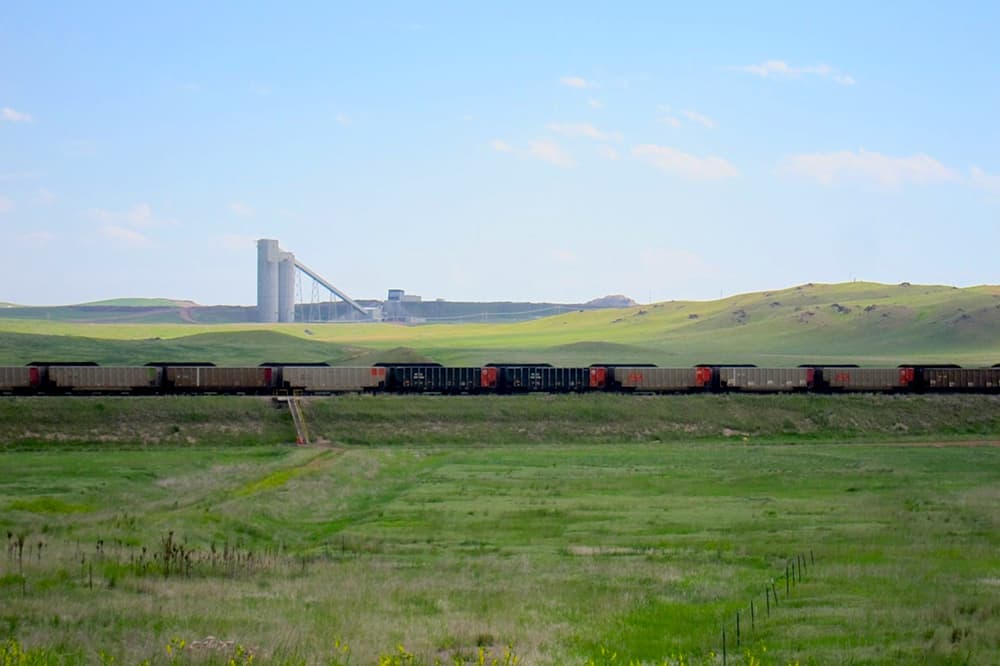
Using open-pit strip mining methods to scoop 50 to 70 feet thick coal seams, the Powder River Basin has long been one of the lowest cost coal-producing regions in the world. But the coal seams gradually dip westward, forcing mines to chase the coal deeper and deeper year after year. Many PRB mines must rely on expensive overland conveyors several miles long to mitigate the cost of moving coal from the pit to load-out facilities built more than 30 years ago near the original mining operations.
The thin margin between cost of mining and sales can be seen in operators’ financial reports. Arch Coal reported a 25 cents per ton operating margin for its Powder River Basin operations for first quarter 2014, which improved to 96 cents first quarter 2015. Higher costs can be overcome with higher sales prices, but the bumper crop of natural gas from U.S. shale plays has held coal prices low, experts say.
Then there are the unexpected events; Peabody Energy recently blamed spring flooding at its PRB operations for $40 million in losses.
Inside Energy recently reported that, on average, each coal miner in Wyoming accounted for 57,320 tons of coal in 2012, down from more than 80,000 tons in 2001 — a 32 percent decline in productivity mostly attributable to mining deeper.
A University of Wyoming report noted “This period of declining productivity also corresponds to the period when real prices of Wyoming coal began to rise. Both observations suggest greater costs associated with increased overburden experienced in mining PRB coal as operations reached deeper into the ground and began to exploit lower quality deposits.”
Still, the PRB remains the cheapest place to mine coal, by far. Mines here average 40 tons of coal per employee per hour compared to the U.S. average 4.4 tons per employee per hour, according to the UW report.
University of Wyoming economist Rob Godby said PRB mines will remain profitable for a long time to come. Despite shrinking margins between the sales price and the cost to mine a ton of coal in the basin, PRB mines are still moneymakers.
“In fact, the Powder River Basin is helping keep the doors open for Arch and Alpha,” Godby told WyoFile.
It just may require an operator that isn’t saddled with massive debt to reap the full benefits of PRB coal. Godby said rising mining costs are not nearly as toxic to Arch Coal and Alpha Natural Resources as their billions of dollars in debt.
“They’d be fine without that debt overload,” Godby said. “Both of these companies have to go bankrupt.”
If they do go bankrupt, Godby said it will be despite their PRB operations. “If there’s ever a time when the last train is leaving the station, it will be leaving from the Powder River Basin.”
— WyoFile editor-in-chief Dustin Bleizeffer visits with Brielle Schaeffer at KHOL 89.1 about big changes in Wyoming’s coal industry, and what it means to Wyoming’s economy.
