

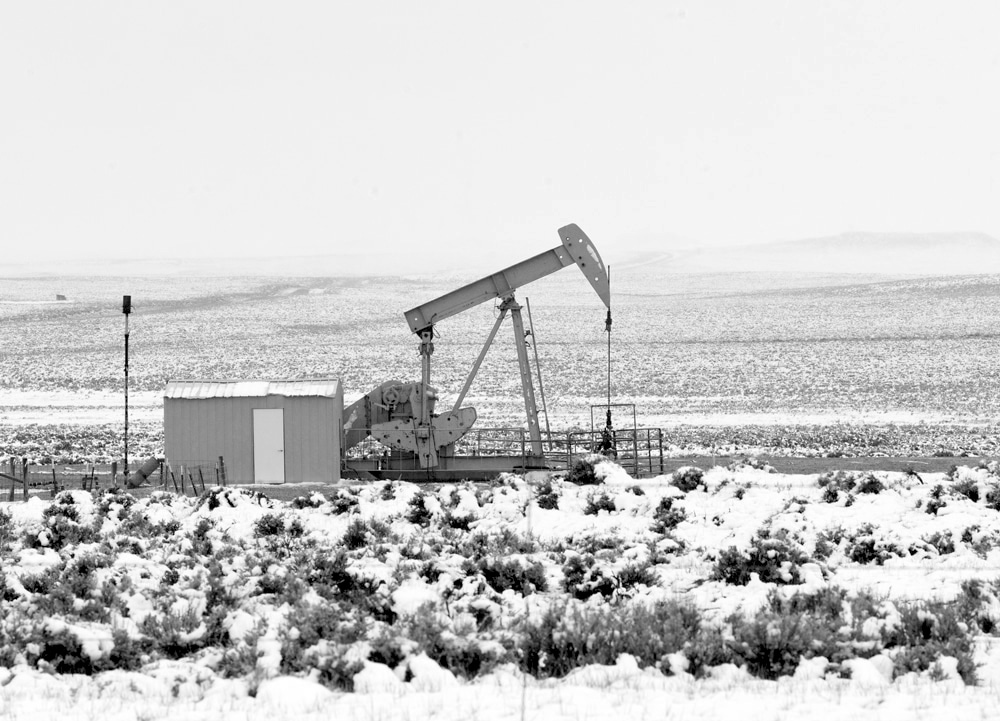
Disposing of contaminated produced water is a continuing and unsolved problem for the oil and gas industry. Now Aethon Energy, a Dallas, Texas-based investment company, has received Wyoming’s permission to ignore clean water rules that protect the potable water in the Madison aquifer.
Aethon proposes solving as little as 0.5% of its produced-water problem by injecting contaminated “water” into the Madison from its oil and gas field near Moneta, between Casper and Riverton.
The responsible solution is to decontaminate or “treat” this water until it might be fit for irrigation or other beneficial uses. That, of course, costs money, time and permanent employee salaries with which Aethon would prefer not to be burdened. The company’s accountants have concluded that treating produced water from the Moneta field is not “economically feasible.” In other words, while the price of gas and oil is low, cleaning their mess cuts too far into their profit. Now the state of Wyoming will subsidize its operation, donating to it the use of the Madison aquifer as a sewer.
This is an unacceptable “solution” to the problem Aethon creates. Why should Wyoming sacrifice the Madison aquifer around Moneta so that a Texas investment company can make more money?
During a long hearing before the Wyoming Oil and Gas Conservation Commission on Nov. 10, Aethon’s consultants went to great lengths to depict the proposal as harmless because no one will ever drill down deep enough to use this water. Aethon’s lawyer revealed his attitude in opening comments, when he called this sagebrush sea around Castle Gardens “what many would consider the middle of nowhere.” Aethon and its consultants did not, however, disclose what crystal ball they used to see into the long future to validate this assertion, nor acknowledge the rarity of good water sources for people living in that part of our beautiful state.
In Wyoming we all know how precious water is; we do not know what technologies nor what desperation for good water may exist seven generations* from now.
Here I would also like to raise a related concern: The difficulty of handling such a quantity of produced water, especially in the cold Wyoming winter.
I know about those difficulties from the years that I worked with my father, who for 40 years was the owner/operator of a federal oil and gas lease about 60 miles northeast of the Moneta field. His was a small field, four wells producing 35 barrels of oil (1,470 gallons) and more than 130,000 gallons of water per day. Dealing with that water was the hardest part of the operation by far, especially in winter.
All that water and the bit of oil from the wells was pumped out of the ground hot, and flowed into fiberglass pipes to a central complex of treatment and storage tanks. He used fiberglass pipe because metal pipes would be quickly corroded by the toxic brew. Passing through the complex, the oil was separated (mostly) from the water and stored for truck transport to Platte Pipeline. The water was further treated to (mostly) remove contaminants before going to settling ponds to become the “headwaters” of North Casper Creek.
Any glitch in pumping or processing meant the flow stopped, and in winter that meant the water would freeze. We all know the havoc that frozen and cracked water pipes cause, but imagine if you had 130,000 gallons of water under pressure and freezing in well heads, pipes, valves and tanks? Yes, there were those times. Spills happened. Cleanup was a cold nightmare. And what to do with the now-contaminated soil?
Support civic discourse — donate to WyoFile today.
Now take a deep breath and imagine producing and handling 56 million gallons of produced water a day. I’m sure Aethon has resources and technology that exceed what we used on a small stripper operation. I’m also sure their wells and infrastructure will experience glitches too, which will lead to surface spills. And I’m damn sure that water they produce will freeze occasionally and cause major spills.
What are their plans for those inevitable spills, leaks and glitches? We don’t know.
Clean water regulations protecting the Madison and other potable, fresh water sources are there precisely so we can avoid a fight every time some company finds it cheap and convenient to pollute those waters.
The rules ensure that we do not have to count on the honesty, morality or far-sightedness of companies, subcontractors or political appointees. Polluting potable groundwater is against the law. Period. In granting this exception, the WOGCC sets a precedent that Aethon, and possibly other companies, will be allowed to rob our bank because they will make more money doing so.
*The Seventh Generation Principle is based on an ancient Iroquois philosophy that the decisions we make today should result in a sustainable world seven generations into the future.
Thanks to Maria Katherman for shedding light on this threat to one of our crucial resource,
and to others who posted some actual facts about the Madison aquifer.
She and others who make sense of mass media gobbly goop obfuscations on important vital questions,
(some articles posing as logical sane exposes end up being nebulous and essentially useless )
are the reason why I contribute to Wyofile.
As a well driller, this is not a good Idea .No one even know where the aquafers start and stop for sure, they can only guess… Also the people in charge of wyomings water have never even even drilled 1 water well, but they did have friends in high places to secure there donut job with the stae, and then suggest ideas like this on the rest of us. .
But state of wyoming never goes by the rules. in fact the state has many substandard wells and water well sites that are not even close to be up to code.
I have done repairs some of the states wells, and you would think, they would go by the rules they put on the rest of us.
very disappointed in the state of Wyoming as well
We shouldn’t be pumping contaminates into our water table, regardless of depth, quantity, percentages and assurances from the minerals/energy industry. I hope Wyoming will resist this proposal while there is still time to do so.
I agree with Mary Flitner. No short term financial gain is worth the risk to long term clean water supply. Surely the Oil and Gas Commission can see this despite pleadings from the companies involved.
I live in Gillette an we use the madison for our drinking water . I know that is a long way away from this project how ever, it is potable water,, an in Wyoming that iOS gold. Hear in Gillette we have several wells in the Madison 40 miles away that are 3000ft deep. So please don’t tell me that it will never be used for drinking!! I am very disappointed in the state of Wyoming!!!
Thanks for addressing this from a voice of experience. The oil and gas industry is pleading for exceptions during this difficult time that they helped create. If they had done it right from the beginning we wouldn’t be in this climate crisis.
Water, or more control of it, has been a political flashpoint in the west for 100 years or more. The State’s kowtowing to Aetheon is an example of what is worst about our current political reality. This one of our versions of the water wars ongoing here in the Western US.
The granted exemption further limits our great-grandchildren’s future by taking away this scarce resource. 100 years from now the pollution will still be there while the “investment” group will be long gone. Short term thinking by the Commission – selling our future for what? Profit for a bunch of Texans and their shareholders?