

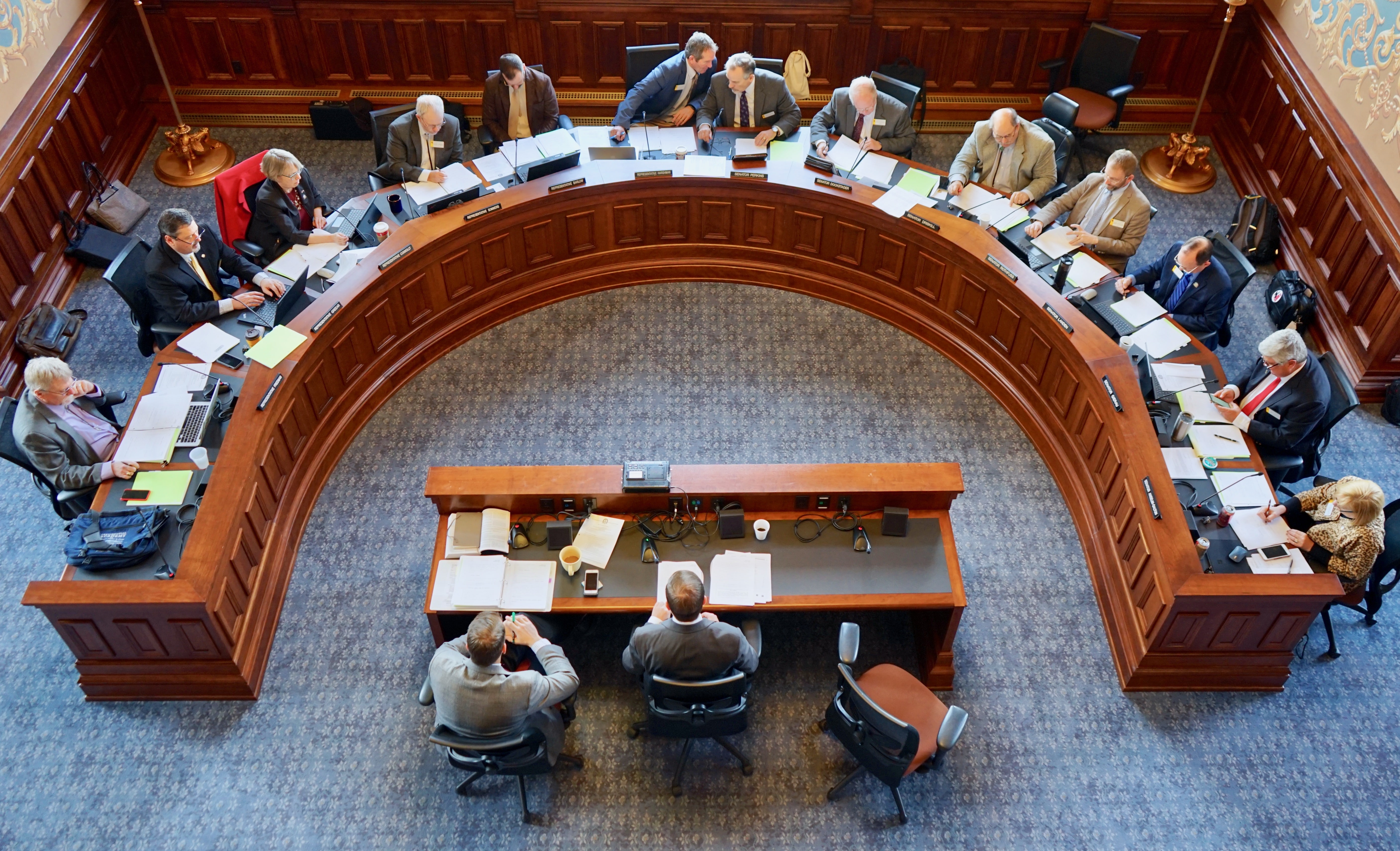
Wyoming lawmakers will give Medicaid expansion a hard look in the 2021 interim after two attempts to pass the measure failed in the Wyoming Senate in the recent session.
The Legislature’s Management Council approved expansion as an interim topic Friday by a 7-4 vote. The Joint Revenue Committee will now take it up.
Long a hot-button topic in Wyoming politics, Medicaid expansion saw renewed interest this session after the federal government passed legislation increasing the federal match.
The Management Council also approved studies on charter schools, a corporate income tax, election law, and education funding as it finalized its list of topics to be examined in the months between now and the 2022 session. Some controversial topics raised in the 2021 session, like the legalization of marijuana, were not raised as potential subjects for the interim session while others, like the potential transfer of federal lands to the state, were significantly pared down.
Observers say the move of the Medicaid issue to the Revenue Committee, rather than the Senate Committee on Labor, Health and Human Services — where it was defeated this spring — is a significant development for Medicaid expansion’s prospects.
Unlike this year — when Medicaid expansion was introduced in the House as an individual, not committee sponsored, bill — the 2022 session will take place in a budget session, where individual bills require a two-thirds vote of the members just to be introduced. Committee bills lack that requirement, making legislation introduced in that type of session much more likely to be heard by the full Legislature.
Support independent reporting — donate to WyoFile today
But the Management Council was not united in its support. On Friday, Rep. Chuck Gray (R-Casper) questioned whether it is a good use of staff time and resources to rehash a measure that had failed to pass numerous times. Others, including Sen. Larry Hicks (R-Baggs), opposed hearing the bill in any committee other than Labor/Health.
Rep. Steve Harshman (R-Casper), a previous skeptic of expansion who changed his stance earlier this year, argued that Wyoming’s economy has changed. When change occurs, he said, the circumstances surrounding discussions on Medicaid expansion should reflect that.
Gray eventually made a motion to remove proposed studies on Medicaid expansion and a corporate income tax from the Revenue committee’s interim topics list. Both motions failed by a 7-4 vote.
Last week’s meeting of Management Council was the final, agenda-setting meeting for the group in its current configuration after the passage of House Bill 36 – Management council membership earlier this session.
The traditionally non-partisan legislative committee sets the agendas, rules and protocols for the entire body.
The bill will reduce the total number of lawmakers on the Management Council. With the current Republican supermajority, it will only impact Democrats, who currently make up five of the council’s 13 members. The change, which will drop the minimum number of Democrats on the council from five to two, will take effect at the beginning of the 2022 legislative session.
“I appreciate this opportunity as long as I’ve got one,” Sen. Mike Gierau (D-Jackson) said Friday morning.

Trying to convince voters in the state that the legislature takes these important issues seriously during the legislatures interim might fool some of the people some of the time but eventually all of the people are going to catch on and the federal government will not be there to save them from the fiscal reality of declining revenues. The toes of legislators shoes must have holes worn in them by now given how often they have opted to kick the can down the road. Interim work is a thankless job and unappreciated by the legislature as a whole when the committee returns with real world solutions only to be ignored because it wasn’t the answer others were hoping for.
The “study” has long been the method utilized by the Legislature to avoid any real action. Look for instance at the Worker’s Compensation system. Throughout the 1980s and 90s the Joint Interim Labor, Health and Social Services Committee would study the issue. Experts were hired, reports were penned, testimony was taken and when results came back that didn’t fit the committee’s preconceived solution, everything was shelved and another study was slated for the next interim.
Everything the Legislature needed to know has been available to them for several sessions now. It is unlikely that any new information will be unearthed in one more study, this is just another way for Legislators to go through the motions of addressing the issue without having to actually do anything.